
Pet Shipping from the USA to New Zealand
New Zealand is rabies free, so the rules for bringing a pet from the United States are strict and very specific, but they are well defined and we plan around them. Pets from the US, which New Zealand treats as a Category 3 country, need an import permit, an ISO microchip, a current rabies vaccination, a rabies antibody blood test, and a minimum stay in an approved quarantine facility on arrival. Pet Travel Advisors maps the full timeline early, then coordinates the vet steps, the titer test, the permit, the quarantine booking, and the routing so each stage happens in the right order.
Every Pet Travels
Differently
Different destinations, different routes, different challenges.
Because timelines, airline rules, and New Zealand’s entry requirements all affect each other, we build a plan that fits your pet and your move date.
Destination-Focused Planning
We use New Zealand's official MPI import health standard as the baseline, then turn it into a simple checklist and timeline you can follow.
Smart Routing and Logistics
We help choose practical routes, travel windows, and handoff procedures so your pet’s trip is safer and more predictable.
Personalized Support
Pet Travel Advisors assigns a move coordinator who keeps you updated and checks details before travel so nothing important is missed.
Pet Shipping from the USA to New Zealand
Moving a pet to New Zealand is a carefully staged process, and the steps depend on your pet and on the current import health standard set by the Ministry for Primary Industries. The titer test and quarantine booking drive the calendar, so starting early matters. If you would like a simple overview of international moves first, start with our guide to international pet shipping destinations. Bringing a pet the other way, into the United States? See our US import guide.
- confirm what applies to your pet and route
- map out a realistic timeline
- coordinate vet steps and paperwork
- support crate readiness and routing
 confirm what applies to your pet and route
How Pet Shipping from the USA to New Zealand Works
To keep everything clear, we break the process into steps:
Verify requirements and timing
We confirm what rules apply based on your pet and travel details.
Build your plan and timeline
We map out what happens when, so steps are completed in the right order.
Coordinate vet preparation
We help keep appointments and timing aligned with what’s required.
Review documents for consistency
We check the details that cause delays (microchip digits, dates, names, signatures).
Confirm crate readiness and routing
We help align crate setup and routing with airline handling expectations.
Travel and arrival processing
We guide you on travel-day handoff and what to expect on arrival.






We keep your checklist aligned with the official rules. For the US export side, we follow USDA APHIS guidance for US to New Zealand travel. For the New Zealand entry rules, we follow the Ministry for Primary Industries step-by-step guide.
Approved Routes and Entry into New Zealand
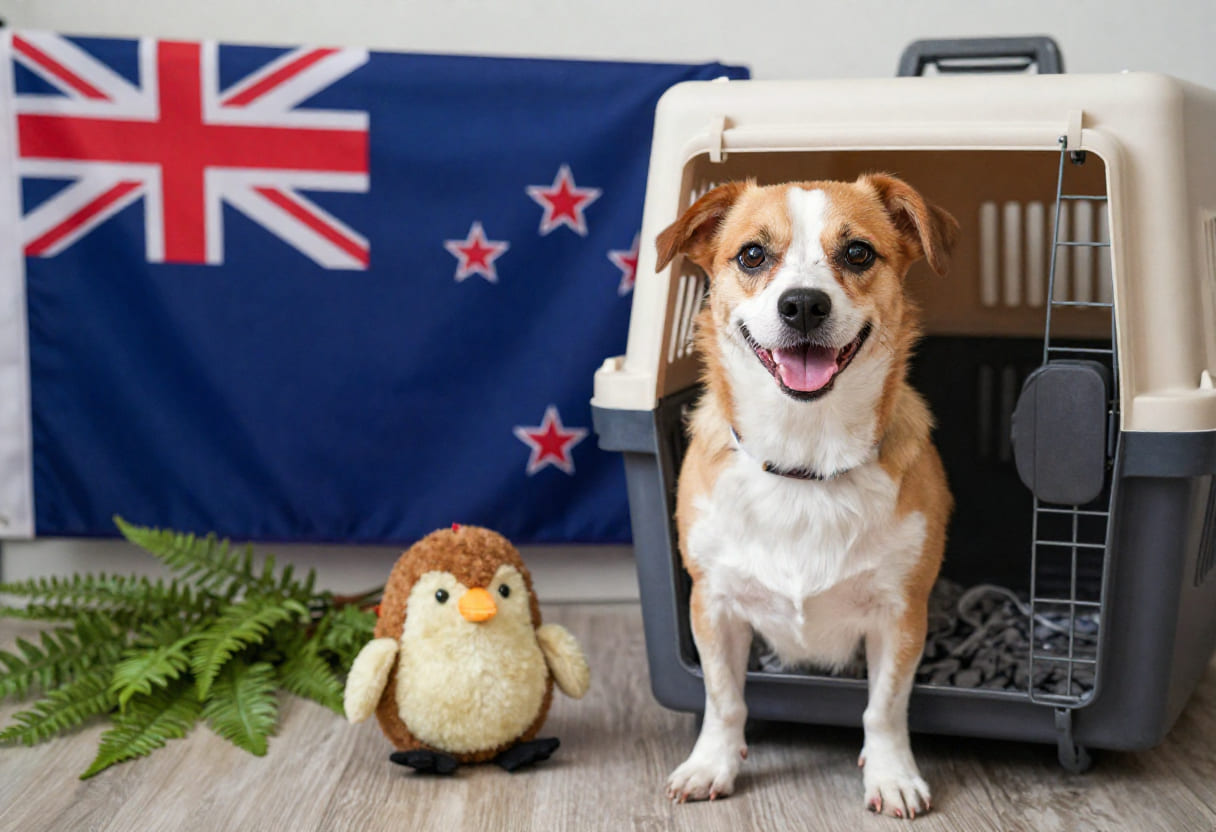
Routing to New Zealand is limited and seasonal, and pets travel as manifest cargo to an approved airport before transferring to an MPI-approved quarantine facility. We confirm the best practical route and book the facility before any travel is locked in.
- routing options can change based on airline availability and season
- we confirm the best practical route before booking
- we make sure your plan matches what’s expected at intake
Entry Requirements and Documentation for New Zealand
Import Eligibility for Pets
Five dog types cannot enter New Zealand at all: the Brazilian Fila, the Dogo Argentino, the Japanese Tosa, the Perro de Presa Canario and the American Pit Bull Terrier type. The animal also has to be more than nine months old on the day of shipment. Both of those settle whether the move is possible at all, so they come before anything else in the plan.
New Zealand requires every pet arriving from a Category 3 country like the United States to spend a minimum of ten days in an MPI-approved quarantine facility, so we reserve a place early as part of the plan. Pets are checked on arrival against their paperwork and microchip, and the import permit conditions have to be met in full, so we keep the documentation tight from the start.
Before scheduling vet steps or flights, we confirm what rules apply to your pet and whether airline policies affect travel. Most moves are dogs and cats, though we handle other pets too, and the requirements can differ by species. Eligibility can come down to your pet’s type and health, airline rules for certain breeds or conditions, the documentation and timing, and which routes are available. Ready to start? Request a quote.
Health Preparation and Documentation
Your pet will need an ISO microchip, a current rabies vaccination, and a rabies antibody titer test with a result of 0.5 IU/ml or higher, taken at an approved laboratory at least three weeks after the vaccination. After the blood draw there is a stand-down of at least three months before your pet can enter, and entry must happen within the permit window. New Zealand also requires specific internal and external parasite treatments close to travel, plus a veterinary health certificate. We line these steps up in the right order and check that microchip numbers, dates, names, and signatures all match across the paperwork.
| Requirement | New Zealand, from the United States |
|---|---|
| Microchip | ISO microchip |
| Rabies vaccination | Current at the time of travel |
| Rabies titer | 0.5 IU/ml or higher, at an approved laboratory, sampled at least 3 weeks after vaccination |
| Stand-down | At least 3 months from the blood sample before your pet can enter |
| Import permit | Required from MPI. Entry has to fall inside the permit window |
| Parasite treatment | Internal and external treatments close to travel |
| Health certificate | Veterinary health certificate on the MPI model form |
| Quarantine | Minimum 10 days at an MPI approved facility, booked before you travel |
Planning Timeline for Pet Shipping to New Zealand
New Zealand is one of the longer moves to plan, because the titer stand-down and the import permit both take time. A typical timeline runs like this: a consultation and an eligibility check, then the microchip and rabies vaccination, then the titer blood draw and its three-month-plus stand-down, the import permit (allow MPI around thirty working days), the quarantine facility booking, and finally the pre-export treatments, document review, and travel.
Planning the budget? See what shipping a pet from the USA to New Zealand costs, fee by fee.
What does it cost to ship a pet from the USA to New Zealand?
A dog or cat moving on this route typically runs $4,500 to $9,000 all in, depending on your pet’s crate size and the season.
Costs depend on your pet’s size and crate, the route and airline, the quarantine facility, vet and titer test fees, and whether the move is door to door. The fastest way to get a real number is a quote based on your origin city and travel date. Request a quote here.
For the itemized breakdown, with every government fee linked to the authority that publishes it, see our full cost breakdown for this route.
What are the requirements to bring a pet into New Zealand from the USA?
Your pet needs an ISO microchip, a current rabies vaccination, a rabies antibody titer test of 0.5 IU/ml or higher, an MPI import permit, and a booked stay in an MPI-approved quarantine facility. Specific parasite treatments and a veterinary health certificate are also required close to travel.
Does my pet have to go into quarantine in New Zealand?
Yes. Pets arriving from the United States spend a minimum of ten days in an MPI-approved quarantine facility, which we book in advance as part of the plan.
How long does the process take?
It is one of the longer moves. The rabies titer test has a stand-down of at least three months from the blood draw before entry, and the import permit takes MPI around thirty working days, so most families plan several months ahead.
Can any dog or cat qualify?
Most healthy dogs and cats can qualify if every step is completed in the right order and on time. Some breeds face restrictions and certain pets need extra treatments, so we check eligibility for your specific pet at the start.
How does Pet Travel Advisors help with a move to New Zealand?
We plan the full timeline, coordinate the vet steps and titer test, prepare and check the import permit and paperwork, book the quarantine facility, arrange a comfortable crate and routing, and stay with the move through arrival.