
US Airline Pet Policies: Delta, United, American and More Compared
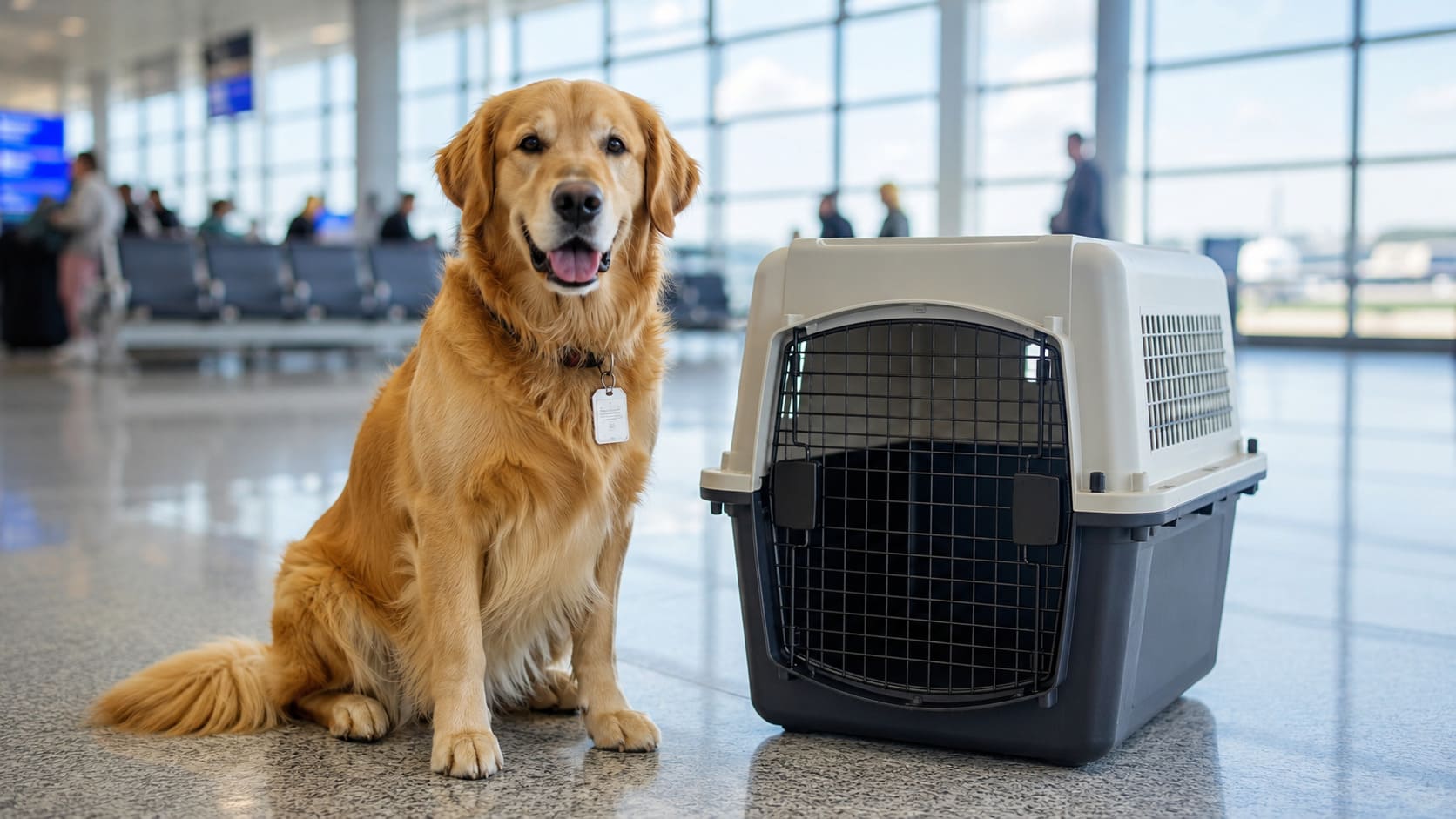
If you are trying to fly with a pet in the United States, the rules depend less on your pet and more on which airline you call. The three biggest carriers have moved in very different directions over the past few years, and much of the advice floating around online is out of date. Here is where Delta and American stand, checked against each airline’s published policy, and where to find United’s own.
The short version
Delta and American both let a small dog or cat ride in the cabin with you for a fee, as long as the carrier fits under the seat in front of you. The differences appear the moment your pet is too big for that carrier. Delta ships pets only for active US military and State Department Foreign Service personnel with permanent change of station orders. American accepts checked pets only for active-duty US military and US State Department Foreign Service personnel on official orders. American Airlines Cargo carries pets for the general public through its PetEmbark service. United publishes its own policy on its pets page. Our pet carrier size checker sets IATA’s minimum for your dog or cat beside the under-seat limits that US and Canadian airlines publish.
That one change explains why so many families with a Labrador or a German Shepherd end up calling a pet relocation company. Our guide to flying with a large dog sets out the four options that remain and the order to work through them. For a large dog, American Airlines Cargo’s PetEmbark service is the public option among these three. Our airline crate size calculator works out IATA’s minimum inside dimensions for your dog or cat’s travel crate.
Delta pet policy
Delta accepts small dogs, cats and household birds in the cabin on domestic flights. The fee is $150 each way within the US, Canada and Puerto Rico, and $200 on most international routes. Your pet travels in a soft-sided kennel under the seat, and Delta recommends one no larger than 18 x 11 x 11 inches. Pets must be at least 8 weeks old for domestic travel, and the kennel counts toward your carry-on allowance.
Space is limited and first come, first served. Delta allows up to 4 pets in Main Cabin and Comfort, 2 in domestic First, and none in Delta One or Premium Select. Call to add your pet as soon as your ticket is booked, not the week before the flight.
Cabin pets are not accepted at all to or from Australia, Hawaii, Hong Kong, Iceland, Jamaica, New Zealand, South Africa, the United Kingdom, the United Arab Emirates and a few other destinations. For those routes your pet needs a different plan entirely.
Checked pets and Delta Cargo shipments are currently limited to active US military and State Department Foreign Service personnel with transfer orders, and Delta describes that restriction as in place until further notice. Where cargo travel is allowed, snub-nosed dogs and cats are excluded, and shipments stop when ground temperatures leave the 20 to 80 degree Fahrenheit range.
United pet policy
United publishes its pet policy on its pets page. Check there whether it carries animals in cargo, and for whom.
Check its cabin fee, carrier sizes, breed rules and limits per traveler on the same page, and plan around United’s own figures rather than a summary of them.
Our United Airlines pet policy guide sets out what to check on United’s page before you book.
American pet policy
On American, the carry-on fee is $150 each way, and the pet carrier does use one of your two pieces: with a pet you may bring either a personal item or a carry-on bag, not both. Soft-sided carriers up to 18 x 11 x 11 inches work on all flights, and mainline aircraft can take up to 20 pet carriers per flight. Carry-on pets are not accepted on transatlantic or transpacific routes, or to Hawaii.
Checked pets are limited to military and State Department personnel on official orders, at $200 per kennel. The difference is what comes next. American Airlines Cargo runs the American PetEmbark program for pets that do not qualify for the cabin, and it is open to the general public, with pricing that depends on the route and the size of the kennel. For families whose dog is simply too big for a carrier, it is a mainline cargo option open to the public.
PetEmbark and checked travel come with real restrictions. American does not accept snub-nosed breeds in the hold, a list that covers bulldogs, pugs, boxers, mastiffs, Shih Tzus and Persian cats among others. American transports warm-blooded animals when ground temperatures are between 45F and 85F. Below that it requires a letter of acclimation signed and dated by a licensed veterinarian, which covers 20F to 44F, and it will not carry an animal at all below 20F. American says pets outside the cabin cannot travel to, through or from Phoenix, Tucson, Las Vegas or Palm Springs from May 1 to September 30. American lists the cities a checked pet may connect through. American will not accept a dog or cat that has been sedated or tranquilized, and Delta does not permit sedation of the dogs and cats it ships.
American is the one carrier here whose cargo hold is still open to the general public, which makes it the answer when a dog does not fit under a seat. Our American Airlines pet policy guide covers the PetEmbark rate products, the temperature window, the breed list and the routes American will not fly, including that it carries no animals outbound from Canada.
If your pet is too big for the cabin
This is where most of our calls start. When a dog cannot fit under a seat, the realistic options are American’s PetEmbark program, an international carrier with a dedicated live-animal program such as Lufthansa, KLM or Air Canada routed through their gateway cities, or professional ground transport for moves within the continental US. Which one makes sense depends on your route, your dates, the season and your dog’s breed.
Snub-nosed breeds deserve special mention. American and Delta will not carry brachycephalic, or snub-nosed, dogs and cats in the hold, and Alaska Air Cargo says it generally does not accept them there. So a French Bulldog or a Pug needs either a cabin seat, a ground plan, or one of the few specialist routings that still accept them. We cover this in more detail in our guide to breed restrictions in pet shipping.
If you are weighing up what any of this will cost, our guide to pet shipping costs breaks down what drives the price. And if you would rather hand the whole puzzle to someone who plans pet routes every day, request a quote and we will map the options for your pet and your dates.
One last note. Airline pet policies change with little warning, and fees are set by the ticket contract in force on the day you book. The rules above were checked against the Delta and American pet pages, and United publishes its own. It is still worth a final check with the airline the day you book.
Four other US carriers have their own rules, and on some routes they are the better option. The policies below were last reviewed in July 2026, so confirm the current fee and carrier limits with the airline before you book.
Alaska Airlines
In-cabin: Dogs, cats, rabbits, and household birds. Fee: $100 each way, or $35 wholly within Hawaii. Soft-sided carriers only, up to 17 x 11 x 9.5 inches, because Alaska does not allow hard-sided kennels in the cabin. Alaska is also the only carrier on this page that will still check a pet into the hold for an ordinary passenger, at $200 each way.
Cargo: Pet Connect, for dogs and cats, shared with Hawaiian since the two airlines merged their pet policies. Two dates matter as of September 2026. French and English Bulldogs are under a full cargo embargo from 31 July 2026 to 30 September 2026, and revised short-nosed breed rules take effect on 1 October 2026, under which Staffordshire Terriers, Pit Bull Terriers and Bull Terriers stay eligible.
Short-nosed breeds are otherwise generally refused in the hold, except on flights to, from or within Hawaii, and those Alaska does accept need a kennel one size larger than standard. Pets are accepted when forecast temperatures at every point on the itinerary are 45 to 85 degrees Fahrenheit, with a certificate of acclimation permitting travel below 45. Connections must be at least two hours on Alaska aircraft, four on Hawaiian transpacific, and no more than six unless kenneling is arranged in advance. Their cargo program serves routes primarily in the western US and Hawaii.
Notable: Alaska Airlines is one of the more pet-accommodating carriers, with a relatively broad acceptance policy and good West Coast coverage.
Southwest Airlines
In-cabin only: Small dogs and cats in a carrier under the seat. Fee: $125 each way on mainland routes, and $35 between the Hawaiian Islands.
No cargo program. Southwest does not carry pets in the hold at all, and it will not carry a pet on any itinerary that includes an international segment. If your pet is too large for an in-cabin carrier, Southwest is not an option.
JetBlue
In-cabin only: Dogs and cats in an approved carrier under the seat. Fee: approximately $125 each way.
No cargo program. Like Southwest, JetBlue only offers in-cabin pet travel. Good for small pets on East Coast and Caribbean routes.
JetBlue is the strictest of the group on carrier size and the plainest about its limits: small dogs and cats only, nothing in the hold at all, and a carrier no more than 8.5 inches tall. Our JetBlue pet policy guide covers the fee, the six pets per flight cap and the interline rule that quietly voids a booking.
Hawaiian Airlines
In-cabin: Small dogs and cats. Fee: the same as Alaska, $100 each way or $35 within Hawaii, because the two airlines merged their pet policies and Hawaiian now points to Alaska for its pet rules.
Cargo: Pet Connect, shared with Alaska, for inter-island and some mainland routes. If you are moving a pet to Hawaii, Hawaiian Airlines is a key carrier to consider. Hawaii’s strict rabies-free import rules apply regardless of airline.
Key things every airline requires
Regardless of which airline you choose, expect these common requirements:
- A health certificate from your vet (typically issued within 10 days of travel for domestic, and USDA-endorsed for international)
- Current rabies vaccination
- An IATA-compliant crate for cargo travel (sized so your pet can stand, turn, and lie down)
- Proper labeling on the crate (“Live Animal” stickers, your contact info, feeding and watering instructions)
- No sedation: American declines sedated animals, and Delta does not permit it for the dogs and cats it ships
How to choose the right airline for your pet
The best airline depends on your pet’s size, breed, route, and season. Here is a quick decision framework:
Small pet in a carrier that fits under the seat: Almost any airline works for in-cabin. Choose based on route and price.
Large pet, standard breed: American or Alaska, both of which ship pets as cargo. Delta ships pets only for active US military and State Department Foreign Service personnel with permanent change of station orders. Compare routes and pricing.
Brachycephalic breed, any size: In-cabin if small enough. For larger flat-faced breeds, Alaska may work with conditions. Otherwise, ground transport may be the safest option.
Summer travel: Early morning flights on airlines with cooler routing options. See our summer shipping guide.
International route: Check whether the airline offers cargo service to your destination country. Not all do.
Frequently asked questions
Can my dog fly in the cabin on Delta, United, or American?
On Delta and American, yes, if your dog is small enough to ride in a carrier under the seat in front of you, and both charge a pet fee. Once a dog outgrows that under-seat carrier, cabin travel is off the table on both. United publishes its own policy on its pets page.
Which US airline still ships pets as cargo?
American Airlines Cargo carries pets for the general public through its PetEmbark service. Delta ships pets only for active US military and State Department Foreign Service personnel with permanent change of station orders. United publishes its own policy on its pets page.
How do I fly a large dog that is too big for the cabin?
The usual routes are American’s cargo program, an international carrier with a live animal program on your route, professional ground transport, or a relocation service that books through the right channel. We compare all the options in our guide to pet air transport.
Do airline pet policies change often?
Yes. Fees, embargo dates, and cargo rules shift from year to year, and much of the advice online is stale. This guide was checked against each airline’s published policy in August 2026. Confirm the details with the airline when you book.
Can I book my pet on any flight?
Not necessarily. Cargo pet programs have limited space per flight, and not every aircraft type accepts pets. In-cabin also has per-flight limits (usually 2 to 4 pets total in the cabin). Book early, especially for popular routes.
Do airline pet fees count toward baggage allowances?
No. Pet fees are separate from baggage fees. On American and Delta the pet carrier leaves room for one more bag, a personal item or a carry-on. On JetBlue the pet and its carrier count as your personal item.
Can I fly with multiple pets?
In the cabin, American takes one pet carrier per passenger and Delta one kennel. JetBlue allows two pets per traveler, each in its own carrier, and the second needs an extra seat and pet fee. If you have multiple pets, you may need multiple passengers or a combination of in-cabin and cargo bookings. We coordinate multi-pet moves regularly.
What happens if my pet’s flight is delayed?
For in-cabin, your pet is with you and experiences the same delay. For cargo, airlines have holding areas with climate control where pets wait during delays. If a delay is extended, the airline may offload the pet for safety.
Are emotional support animals treated differently?
Most US airlines no longer recognize emotional support animals for free in-cabin travel. ESAs are treated the same as standard pets and must meet the same size, carrier, and fee requirements. Service animals (trained to perform specific tasks for a disability) fly free under DOT rules.
Ready to plan your pet’s move?
Tell us your route and your pet. Request a quote and we will reply with a plan, a timeline, and clear next steps.
Sources
Checked August 2026.
- Delta, pet travel. Delta cabin rules, kennel limits, minimum age, fees and embargoed destinations.
- United, traveling with pets. United’s own cabin rules and pet carriage options, the place to check them.
- American Airlines, pets. The carry-on fee, the limits on checked pets, the brachycephalic restriction and the temperature window.
- Alaska Airlines, traveling with pets. Now the combined Alaska and Hawaiian pet policy, covering cabin, baggage compartment and cargo.
- Southwest, booking travel with a pet. Southwest is cabin only, with one carrier per passenger and an 8 week minimum age.
- JetBlue, traveling with pets. JetBlue is cabin only, with a fixed carrier size limit and two pets per traveler.
- US Department of Transportation, animal incident reporting 2026. Federal data on animal death, injury and loss by carrier.
Moving between October and March? Our guide to fall and winter pet travel embargoes covers the closures and temperature limits that decide whether a booking survives the season.
Delta is the carrier people ask about most, and its policy is the narrowest of the majors: a cabin kennel sized to the aircraft, for which Delta recommends 18 by 11 by 11 inches, with checked baggage and cargo closed to everyone outside active military and State Department families. Our Delta pet policy guide covers the fees, the age minimums and the temperature thresholds in full.
Last updated