
Ground Pet Transport: Options, Costs, and When Driving Makes Sense
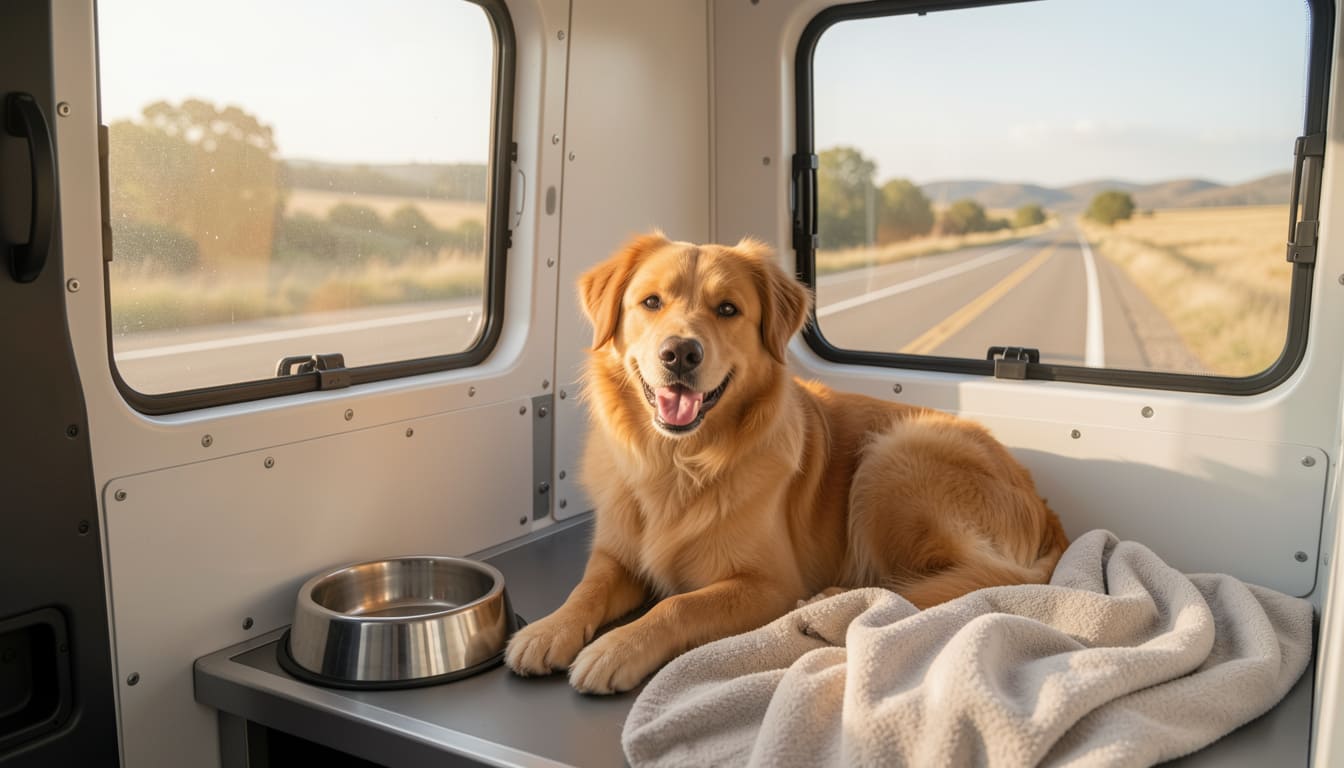
Flying is not always the answer. For shorter distances, for pets that panic in the air, and for owners who want their animal to stay on the ground the whole way, ground pet transport is often the calmer and cheaper choice. Here is when driving makes sense, what a professional ground service actually does, what it costs, and how to do the drive yourself if you go that route.
When ground transport is the right call
- The distance is drivable in a day or two rather than a full cross-continent haul.
- Your pet is a snub-nosed breed that airlines restrict from the hold.
- Your pet is anxious in the air or has a medical reason to avoid altitude.
- You would rather your pet never leave a familiar, climate-controlled vehicle.
For flat-faced breeds in particular, ground is frequently the safest option. Our guide on breed restrictions explains why airlines limit these dogs and cats.
What a professional ground service does
A ground service is more than a ride. A good one travels in a climate-controlled vehicle, keeps to a schedule you can track, stops regularly for water, walks, and bathroom breaks, and keeps you updated along the way. Your pet stays crated or secured for safety, in a space designed for animals rather than a back seat piled with boxes.
Driving your pet yourself
If you are doing the drive on your own, a few things make it far smoother:
- Secure the crate or use a proper harness so your pet is safe if you stop short.
- Never leave a pet in a parked car in warm weather, even for a few minutes.
- Plan your stops around walks and water, roughly every three to four hours.
- Keep the first day short so everyone settles into the rhythm.
- Pack a small kit: food, a familiar toy or blanket, waste bags, medications, and vaccination records.
Our what to pack for pet travel and settling in after a move guides help before and after the drive.
What ground transport costs
Ground pricing tracks distance more than anything else. A professional service commonly runs a few hundred dollars for a short regional move up to roughly 1,800 dollars for a long haul, which is often less than flying once you add airline fees, crates, and coordination. The trade-off is time. See the full picture in our cost guide.
Ground or air? A quick way to decide
If the route is drivable in a day or two, or your pet is a snub-nosed breed, ground is usually the better call. If the distance is coast to coast, air usually wins on both time and stress. If you are torn, our overview of pet air transport and our full moving across the country guide lay the two side by side.
Why ground has become the default for many big dogs
Delta ships pets only for active US military and State Department Foreign Service personnel with permanent change of station orders. United publishes its own policy on its pets page. Air cargo that is open to the public is subject to summer heat embargoes. For large dogs, and for any snub-nosed breed, a climate-controlled van with a professional driver is now often the most bookable option, not just the calmest one.
Paperwork still applies on the road
Crossing state lines by highway does not skip the vet. Most states require a certificate of veterinary inspection, often called a CVI or interstate health certificate, issued by an accredited vet within 10 days of travel. Reputable ground services will ask for it plus a current rabies certificate before pickup. If a transporter does not ask for paperwork, treat that as a warning sign about how the rest of the trip will be run.
Questions worth asking any ground transporter
- Is the vehicle climate controlled in both the cab and the animal area, and how is temperature monitored?
- How often are exercise and bathroom stops made, and where do pets stay overnight on multi-day routes?
- Is the service door to door, and who else’s pets share the vehicle?
- What updates do you send along the way, and who do I call mid-route?
- Are you USDA registered as a transporter, and can you show proof of insurance?
A dedicated solo trip costs more than a shared shuttle, and the price difference is mostly about route directness and how many stops your pet makes before yours.
Frequently asked questions
Is ground transport cheaper than flying a pet?
Often, yes, for drivable distances, once you factor in airline fees and crates. Over very long distances, flying can win on both time and total cost.
How long can a pet safely travel by road in a day?
A good service breaks the day with regular stops for water, walks, and rest. Pets are never left in a hot vehicle, and long routes are split across days.
Can a snub-nosed breed travel by ground?
Yes. Ground transport is one of the best options for brachycephalic dogs and cats that airlines restrict from the hold.
Is ground transport good for a nervous dog?
Often, yes. Staying at ground level in a steady vehicle avoids the noise and pressure changes of flight, which suits many anxious pets.
How long does coast-to-coast ground transport take?
It depends on whether the trip is dedicated or shared. A dedicated run drives close to straight through with planned rest stops, while shared routes add days as other pets are picked up and dropped off. Ask for the planned day count and overnight arrangements in writing before booking.
Does my dog stay in a crate the whole drive?
Pets ride secured, usually in a crate or a partitioned kennel space, with scheduled breaks for walking, water, and bathroom stops. Ask each service how their vehicle is set up, since layouts differ.
Is ground transport safe in summer?
Yes, and it is often the safer choice, because a climate-controlled vehicle is not subject to the airline heat embargoes that ground cargo flights in hot months. See our summer heat embargo guide for how air rules tighten in summer.
Related guides
- How to Move Your Pet Across the Country
- How to Ship a Dog to Another State
- Breed Restrictions for Pet Shipping
Ready to plan your pet’s move?
Tell us the route and your pet, and we will tell you honestly whether ground or air fits best. Request a quote and we will reply with a plan, a timeline, and clear next steps.
Sources
Checked August 2026.
- USDA APHIS, transporting animals in commerce. A business that takes custody of pets for hire has to be registered with USDA.
- 9 CFR part 3, subpart A: humane handling, care, treatment and transportation of dogs and cats. The binding standards, including the temperature floor and the food and water intervals.
- AVMA, animal travel and transport. Fitness to travel, and how transit time, age, species and climate should shape routing and rest stops.
Crossing into Canada by road has its own rule set, separate from anything an airline or a domestic mover asks for. Our guide to driving your pet across the US-Canada border covers what Canada wants at the booth, what the CDC wants on the way home, and the provincial breed law that catches drivers by surprise.
Last updated