
How to Move Your Pet Across the Country: The Complete Guide
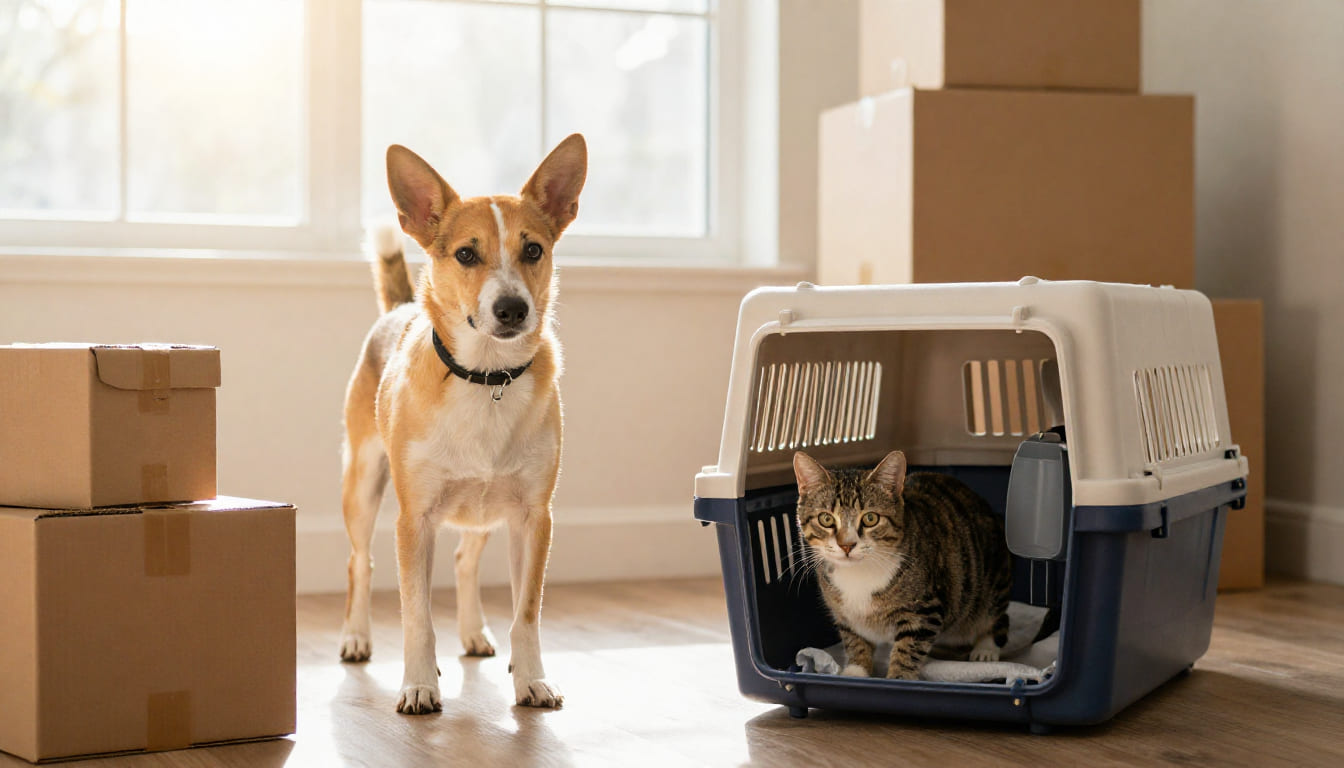
Moving across the country with a pet is very doable, but it rewards planning over luck. Most domestic moves come together in one to two weeks once the route and paperwork are set. The two things that decide how smoothly it goes are the travel method you choose and how early you start. This guide walks you through the whole process, from choosing between driving and flying to settling your dog or cat into the new home.
The short version
- Decide early: drive, fly, or hire a service. Distance and your pet’s size usually make the choice for you.
- Book flights two to four weeks ahead. Pet spots are limited, and summer fills up fast.
- Get an airline-approved crate and let your pet live in it for two to three weeks before travel.
- Domestic paperwork is light: a current rabies vaccination, and a health certificate if the airline asks.
- Plan the arrival as carefully as the departure.
Step 1: Choose how your pet will travel
Every cross-country move comes down to three paths, and the right one depends on distance, your timeline, your pet’s size and temperament, and how much of the logistics you want to manage yourself.
Driving
Driving suits shorter moves and pets that travel calmly by car. You keep your pet with you the whole way. The trade-off is time, since a cross-country drive is days on the road, so it works best over drivable distances. Our guide to ground pet transport covers this option in full.
Flying
For long hauls, for example California to the East Coast, flying is usually the only practical option. Small pets may travel in the cabin, while larger pets fly in the hold. Our guide to pet air transport breaks down the cabin, cargo, and charter options, and keeping your pet safe during air travel covers the details.
Hiring a relocation service
A service is the right call when the timing is tight, the crate and airline rules feel confusing, or your pet is a snub-nosed breed with air restrictions. We handle the route, the crate, the booking, and the paperwork. You can request a quote and we will map your specific route. If you are weighing it up, see should you hire a pet relocation service.
Step 2: Book early and size the crate right
Airlines limit how many pets travel on each flight, and those spots fill up in summer and around holidays. Book as far ahead as you can, ideally two to four weeks out. Your pet also needs an airline-approved crate that is big enough to stand, turn around, and lie down in comfortably. The single best thing you can do before travel day is set the crate up at home two to three weeks early and feed your pet in it, so it feels like their own space rather than a strange box on a stressful day. See what to pack for pet travel for the rest.
Step 3: Sort the health paperwork
Travel within the US is far simpler than crossing a border. Airlines still expect your pet to be healthy and fit to fly. A current rabies vaccination and a recent vet check are the baseline. If your airline requires a health certificate, get it dated close to the travel date, and confirm your pet is microchipped. If your move is international rather than domestic, see our guide on the USDA health certificate and, for some countries, the rabies titer test.
Step 4: Plan the route, then plan the arrival
Direct flights are worth paying for. Every connection adds a transfer, and transfers are where stress and delays happen. If a layover is unavoidable, build in enough time that a short delay does not cause a missed connection. The arrival matters just as much as the departure. Our guide on helping your pet settle after a move walks through the first week in the new home.
What a cross-country move costs
Costs vary with distance, your pet’s size, and the service level. As a rough guide, a ground transport service runs about 500 to 1,500 dollars depending on distance, airline fees for a pet in the hold run about 400 to 1,200 dollars, and full-service door to door coordination typically lands between 1,500 and 3,500 dollars. Our cost guide has the full breakdown.
Moving a specific pet?
The plan shifts a little by animal. See our dedicated guides for shipping a dog to another state, shipping a cat to another state, and shipping a puppy. Moving abroad instead? Start with how to transport pets overseas or browse all international destinations.
The numbers to budget around
- In-cabin airline fee for a small pet: $150 each way on American, Delta or JetBlue.
- Domestic air cargo: $200 to $700 depending on route and crate size.
- Professional ground transport: $500 to $2,500.
- Full-service relocation, everything handled: $1,500 to $3,000.
- Airline-compliant crate: $50 to $300 by size.
- Health certificate: your vet sets the exam fee, so ask when you book.
Two pets do not simply double the total, since some costs are shared, and a very large crate can push an air quote past a ground quote. Get both quoted before deciding. The full breakdown lives in our cost guide.
Booking in 2026: capacity is the constraint
Delta ships pets only for active US military and State Department Foreign Service personnel with permanent change of station orders. United publishes its own policy on its pets page. American Airlines Cargo carries pets for the general public through its PetEmbark service. The good routings go early, especially in summer when heat embargoes cancel hot-weather departures. Two to four weeks of lead time is the working minimum; more is better for snub-nosed breeds and summer dates.
The first 72 hours after arrival
Set up one quiet room before the pet arrives: their bed, water, familiar-smelling items, litter for cats. Keep the routine boring for three days. Feed at the usual times, walk familiar loops, and resist introducing the whole house at once. Most pets settle fast when one room smells like home. Our settling-in guide covers the first weeks.
Want this as a printable list? Our free two page checklist covers every step in order, from the first vet visit to travel day, with space for your own notes.
Frequently asked questions
How far in advance should I plan a cross-country pet move?
Aim for at least two to three weeks for a domestic move. Flights and crate sizing take time, and summer books up fast.
Is it better to drive or fly my pet across the country?
Driving suits shorter trips and calm travelers. Flying is usually the practical choice for long distances, and a service can handle the crate and airline booking for you.
Do I need documents to move my pet within the US?
You are not crossing a border, so requirements are light. Expect a current rabies vaccination, and a health certificate if your airline asks for one.
Can my snub-nosed dog or cat travel across the country?
Yes. American and Delta will not carry brachycephalic, or snub-nosed, dogs and cats in the hold, and Alaska Air Cargo says it generally does not accept them there. Ground transport is usually the safer option. See our guide on breed restrictions.
Should I fly or drive my pet across the country?
For a coast-to-coast distance, air is faster and often easier on the pet than four or five days on the road. For drivable distances, or for snub-nosed breeds that airlines restrict from cargo, professional ground transport is usually the calmer and more bookable choice.
How much lead time do I really need?
Two to four weeks for a standard domestic move, counting the vet visit inside the final 10 days for the health certificate. Add more lead time in summer and for breeds with airline restrictions.
Related guides
Ready to plan your pet’s move?
Tell us where your pet is starting and where they are headed. Request a quote and we will reply with a plan, a timeline, and clear next steps.
Sources
Checked August 2026.
- USDA APHIS, take a pet from one US state or territory to another. The destination state sets the health certificate, vaccination and testing rules. APHIS does not regulate an owner moving their own pet.
- AVMA, animal travel certificates, regulations and requirements. What a Certificate of Veterinary Inspection is, who can issue one, and when an acclimation certificate is needed.
- AVMA, traveling with your dog or cat. Restraint, rest breaks, carrier acclimation, and why a pet is never left alone in a parked car.
Crossing into Canada by road has its own rule set, separate from anything an airline or a domestic mover asks for. Our guide to driving your pet across the US-Canada border covers what Canada wants at the booth, what the CDC wants on the way home, and the provincial breed law that catches drivers by surprise.
Last updated