
Pet Cargo Airlines: How International Carriers Ship Pets
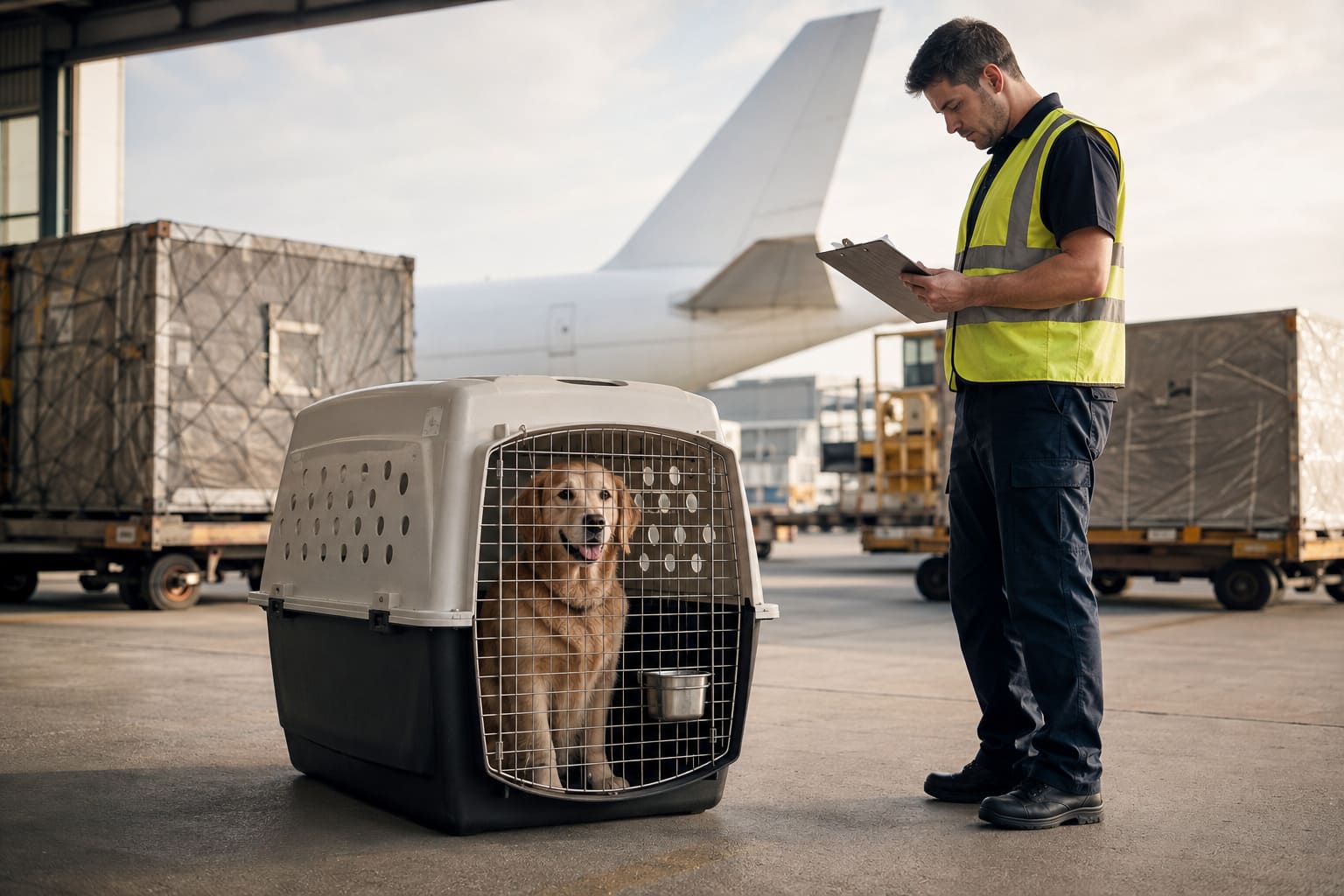
Most international pet moves fly with a pet cargo airline, not in the cabin. Once a route crosses an ocean, size limits, connection rules, and import requirements push all but the smallest pets into the hold. The good news: a handful of international carriers run dedicated animal programs with trained handlers and purpose built facilities. Here is how the main options compare, and why the route often matters more than the logo on the tail. Programs change, so treat this as a map rather than a rulebook and confirm details at booking.
Why international moves usually mean cargo, not the cabin
On a domestic flight, a small dog can sometimes ride under the seat. International is different. Many countries require pets to arrive as manifested cargo so border officials can clear them properly, and long haul routes only accept animals in the hold. If the options are new to you, start with our guide to pet air transport, which walks through in-cabin, cargo, and charter side by side.
Lufthansa
Lufthansa is often the first name you hear for Europe, and for good reason. Its Frankfurt hub runs a dedicated Animal Lounge where connecting pets are rested, watered, and checked between flights. That makes Lufthansa a strong pick when your pet needs a connection, for example from a smaller US city into Germany and onward. Snub nosed breed rules and seasonal limits still apply, so crate size and breed get confirmed at booking.
KLM and Air France
KLM and Air France move animals through Amsterdam and Paris. Schiphol has a dedicated animal care facility for pets in transit, and both carriers publish clear crate and booking rules. For western Europe, one connection through Amsterdam or Paris is usually gentler on a pet than two stops on a cheaper itinerary.
Qatar Airways and Emirates
For the Middle East, Asia, and Africa, the Gulf carriers are hard to beat on network. Qatar Airways routes animals through Doha and Emirates through Dubai, both with live animal handling teams and modern, temperature controlled facilities. If you are relocating to one of the destinations we cover in that part of the world, one of these two will usually be on your shortlist.
British Airways and the US carriers
British Airways accepts pets through its cargo arm rather than at the passenger counter. Even a small dog flies as cargo into the UK, because the UK does not allow pets to arrive in the cabin. From the US side, the picture among Delta, United, and American is its own story; we compare them in our US airline pet policies guide.
One thing to plan for early
Many international carriers do not sell pet cargo space directly to owners at all. They only take bookings from approved animal shippers, which is why an individual asking for a quote can get refused or simply never hear back. That is normal, not a red flag. It also means the airline decision usually gets made together with whoever is managing your move.
What matters more than the airline
Route first, airline second. Fewer connections beat a famous brand with two layovers. Departure and arrival temperatures decide whether your pet can fly at all in midsummer or deep winter. Aircraft type matters, since some holds and some routes do not take animals. And your pet’s breed can narrow the field quickly; see our guide to breed restrictions in pet shipping if you have a snub nosed dog or cat.
Where a relocation service fits
This is the part of a move where owners lose the most time: calling airlines that only answer to shippers, comparing rules that change quarterly, and guessing at crate sizes. We plan the route, confirm the airline’s current rules, line up the health certificate timeline, and place the booking through the right channel, then keep you posted leg by leg. Budget wise, most international moves run from about $800 on the cheapest lane to $12,000 for Australia, all in; our pet shipping cost guide shows where that money goes.
Published rates: the American Airlines anchor
American Airlines Cargo publishes its live animal tariff, which makes it a public anchor for what flying a pet internationally costs. From the current published tariff, checked July 2026:
- US to the UK, Ireland, Germany, France, Spain, Italy, or the Netherlands: minimum charge $690, around $31 per kilogram of chargeable weight at the entry break.
- US to Australia: minimum charge $720.
- US to Japan or New Zealand: minimum charge $715, around $33 per kilogram.
- US to Mexico, Central America, and much of the Caribbean: minimum charge $420.
- Plus a $150 live animal processing fee per shipment.
Chargeable weight is the greater of the crate’s actual weight and its volumetric weight, and for pets the volumetric number nearly always wins. A large dog in a large crate frequently bills at 60 to 70 kilograms even when the scale says less, which is why crate size drives these bills more than the animal does. Our air transport guide walks through the math.
Routes the tariff does not cover
The published tariff covers about 50 countries but not every lane. India, China, Korea, the Gulf states, Southeast Asia, and South Africa are quoted per route, usually on foreign flag carriers like the ones above. No carrier publishes a rate card for those lanes, so treat any site that quotes an exact figure for them with caution. A real quote comes from the airline for your crate size on your dates.
Sources
Carrier live-animal programs change, and embargoes appear at short notice. Checked August 2026, and worth confirming with the airline before you commit to a route.
- Lufthansa Cargo, Live Animals, the operator of the Frankfurt Animal Lounge.
- Air France KLM Martinair Cargo, Transporting dogs and cats.
- American Airlines Cargo, Pets and Animals, for the PetEmbark published rates and the seasonal embargoes.
- IATA Live Animals Regulations, the container and handling standard every one of these carriers applies.
- USDA APHIS, pet export requirements by destination, for the paperwork side of any flight leaving the United States.
Frequently asked questions
Can I book pet cargo directly with an airline?
Sometimes. A few carriers take owner bookings on simple routes, while many only accept bookings from approved animal shippers. Check the airline’s live animal page first, and expect longer lead times either way.
Which airline is safest for pets in cargo?
Safety records are broadly strong across the major international programs. What actually moves the needle is routing: fewer connections, mild temperatures on both ends, a modern widebody, and a crate your pet already knows.
How much does international pet cargo cost?
Most international moves run between about $800 for the cheapest lanes and $12,000 for Australia once you count the freight charge, crate, vet work, and destination fees. The airline freight portion is only one slice of that.
Do pets get food and water on long cargo flights?
Crates carry attached water cups that are refilled during ground stops, and hub facilities like Frankfurt’s Animal Lounge water and check animals between legs. Food is kept light right before flying, on vet guidance, so travel stays comfortable.
What is the minimum I should expect to pay for international pet cargo?
Using American’s published tariff as the anchor, minimum freight charges run from $420 on Mexico and Caribbean lanes to $690 to $720 for Europe, Japan, New Zealand, and Australia, before the $150 processing fee, government fees, and any handling charges at the destination airport. Larger dogs bill above the minimums on chargeable weight.
Do Delta or United fly pets internationally?
Delta ships pets only for active US military and State Department Foreign Service personnel with permanent change of station orders. United publishes its own policy on its pets page. International routes are usually built on American or on foreign carriers with strong live animal programs.
Related guides
- Pet Air Transport Explained: In-Cabin, Cargo, and Charter
- US Airline Pet Policies in 2026: Delta, United and American Compared
- How Much Does Pet Shipping Cost in 2026?
Ready to plan your pet’s move?
Tell us your route and your pet. Request a quote and we will reply with a plan, a timeline, and clear next steps.
Last updated